
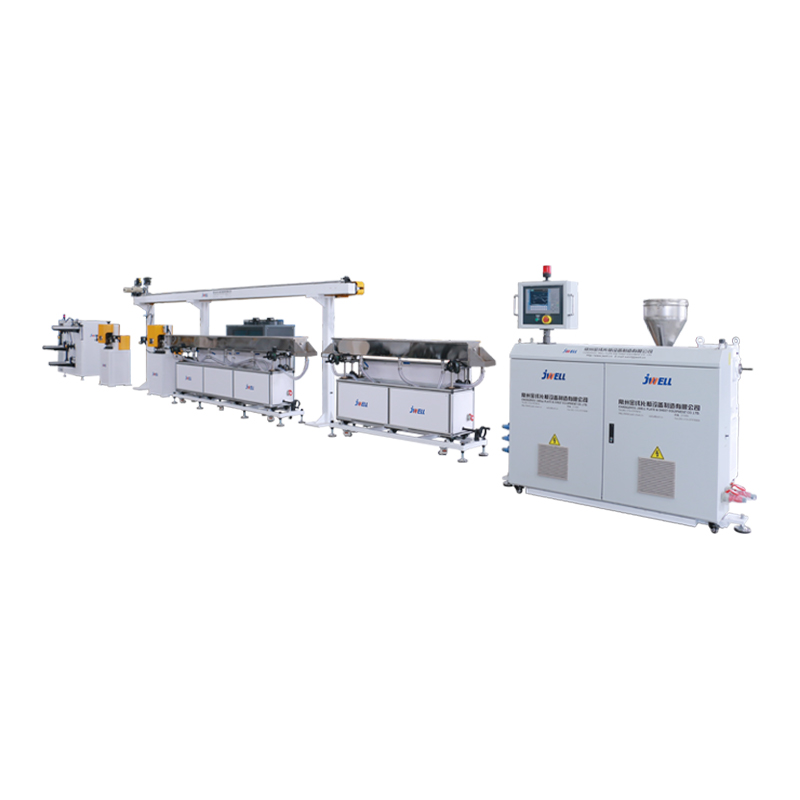
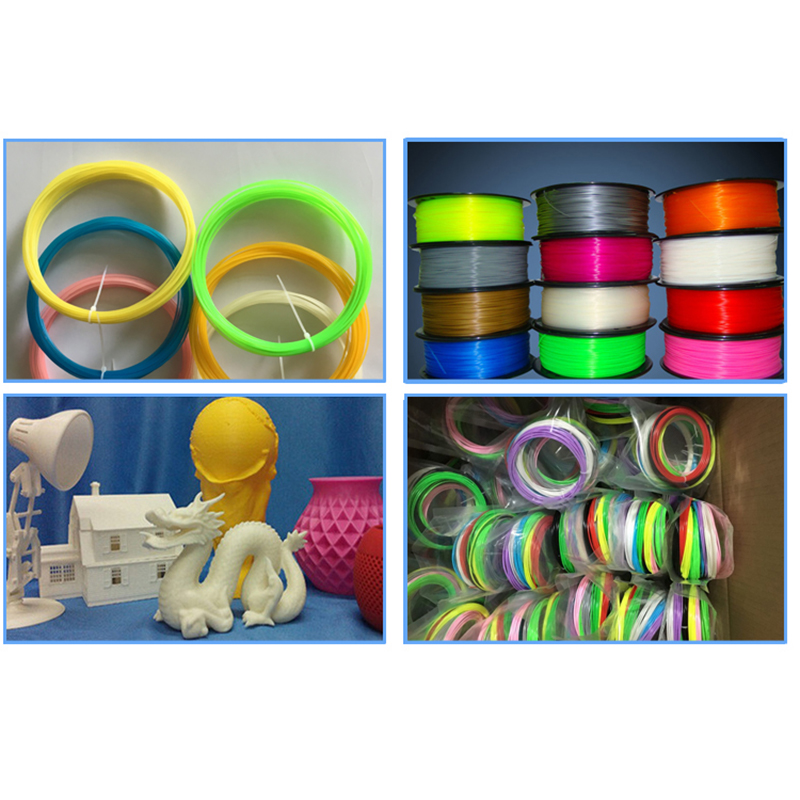
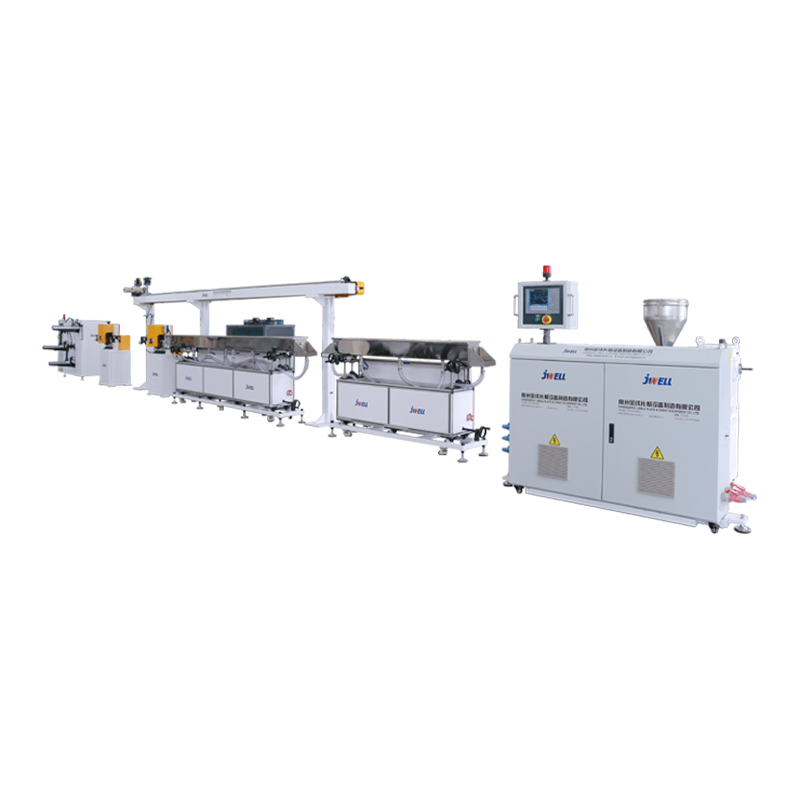
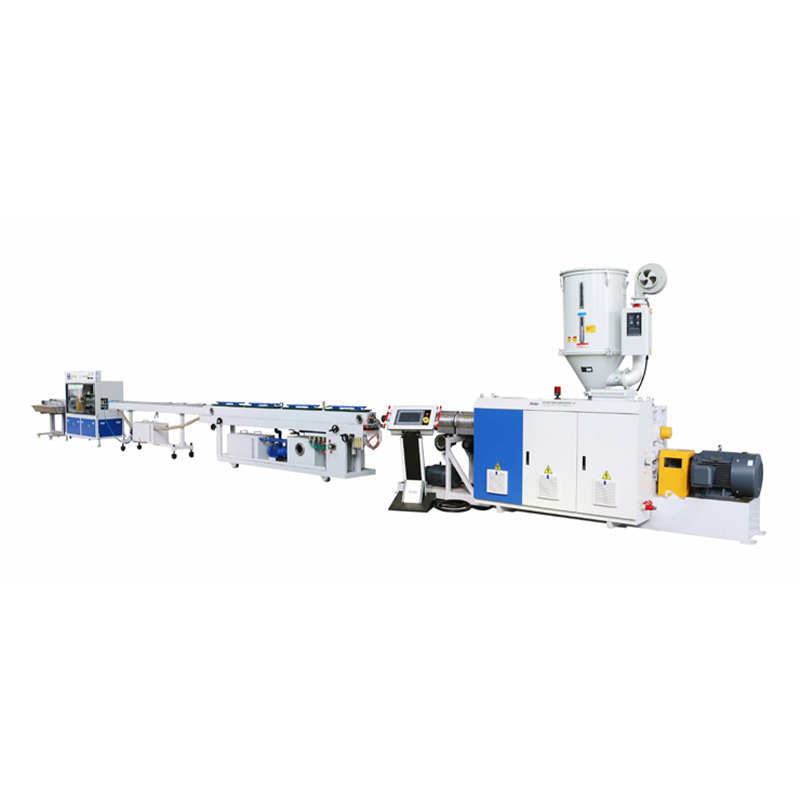
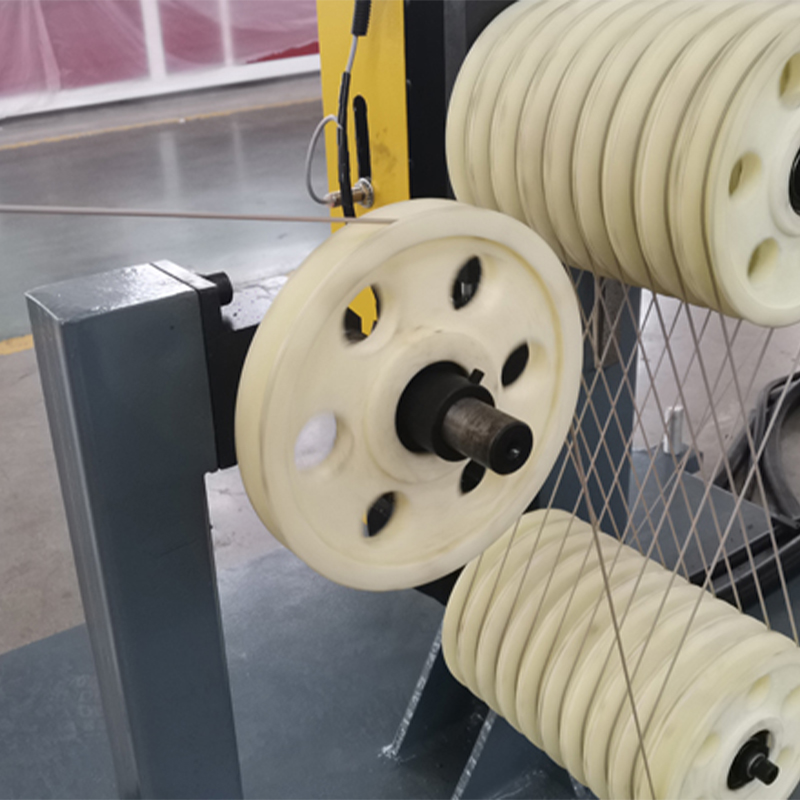
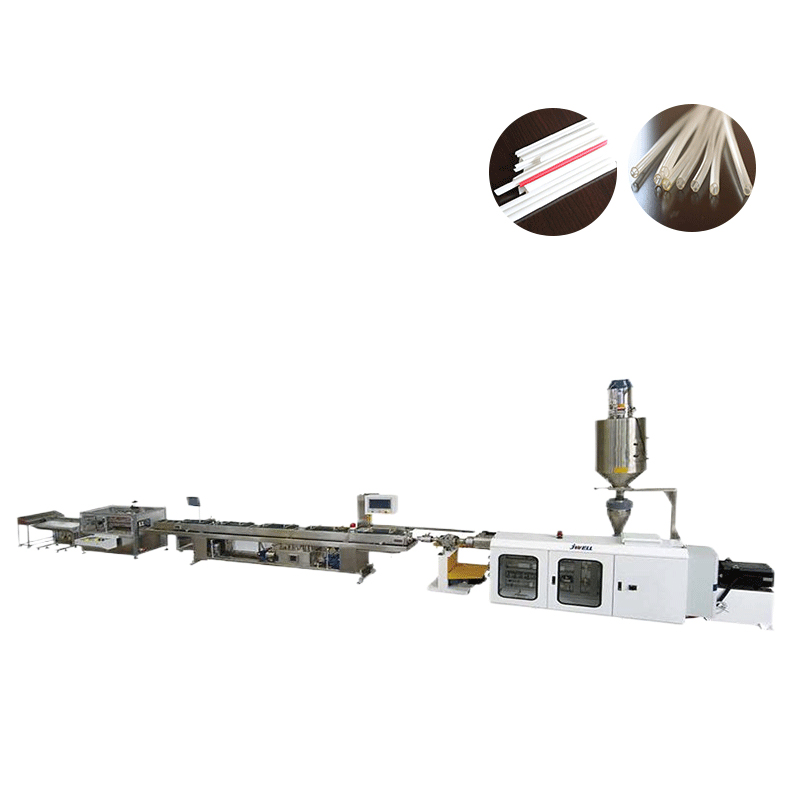
The JWS series 3D printing filament extrusion line is specifically designed for high-performance, high-volume production. The entire system focuses on production efficiency and operational convenience, supporting rapid material changeovers, recipe storage, and modular upgrades. It helps users reduce per-kilogram costs and achieve a fast return on investment. It is suitable for filament manufacturers, 3D printing service providers, and industrial prototyping facilities.
JWS-PLA-3A and 3B – Standard 1.75mm / 3.0mm filament
These two models are the main workhorses for producing common 3D printing filaments:
PLA, ABS, PETG – Perfectly matched for desktop 3D printers (e.g., Prusa, Ultimaker, Creality).
Flexible filaments (TPU, TPE) – The 3B model’s high torque and speed stability make it ideal for soft materials.
Engineering materials (PA, PC, ASA) – With proper drying and screw design.
Real-world case: A German filament manufacturer used the JWS-PLA-3B to produce 1.75mm PLA at 110 m/min (close to the maximum 120 m/min), achieving approximately 200 kg per day with a tolerance of ±0.02 mm. They replaced two old production lines with one JWS-PLA-3B, reducing labor costs by 40%.
JWS-PA-18 – Large-diameter rods and specialty filaments
Diameter range 3–18 mm, suitable for industrial applications:
Large-format 3D printers (e.g., pellet extruders or large-nozzle systems) using 3–8 mm rods.
Plastic welding rods (e.g., PP, PE, PA).
Prototyping rods for CNC machining or extrusion-based additive manufacturing.
Real-world case: A US industrial 3D printing service provider used the JWS-PA-18 to produce 6.35 mm (1/4 inch) nylon rods for a custom pellet-printing tooling project. A speed of 35 m/min allowed them to restock within hours instead of days.
High-speed production (up to 120 m/min)
The JWS-PLA-3B runs at 120 m/min – one of the fastest in its class. This means:
Higher output per shift
Lower energy and labor costs per kg
Faster return on investment
Robust and durable extruder
JWS-30/28 (25 kW) – Optimized for small-diameter filaments (1–3 mm), energy-efficient.
JWS-45/30 (40 kW) – Larger screw, higher torque, suitable for standard filaments as well as PA, PC, or filled materials.
30:1 L/D ratio ensures excellent melting, mixing, and degassing – essential for bubble-free filaments.
Tight diameter tolerance
Thanks to high-precision laser gauges and closed-loop control, all models maintain ±0.02 mm accuracy (even at high speeds). No more nozzle clogs or inconsistent extrusion.
User-friendly design
Quick screen changers and breaker plates
Easy-to-remove screw and barrel (cleaning time < 30 minutes)
Intuitive touchscreen HMI with recipe storage
We implement a four-stage QC process to ensure every meter of filament meets industry standards.
Stage 1 – Raw material inspection
Moisture content analysis (<0.02% for PLA/ABS)
Melt Flow Index (MFI) testing to verify material consistency
Stage 2 – In-line monitoring
Laser gauge (dual-axis or four-axis) – 500 readings per second, continuous measurement.
Automatic feedback to puller and cooling system – instant speed adjustments when diameter deviates.
Tension controller – prevents stretching or oscillation.
Stage 3 – Off-line sampling (every 2 hours)
Randomly test 10 points per spool using a micrometer
Roundness test (ovality < 0.01 mm)
Visual inspection for surface defects, bubbles, or carbon deposits
Stage 4 – Spooling & final testing
Print test on a standard 3D printer (e.g., 20mm calibration cube, overhang test)
Interlayer adhesion and stringing evaluation
Spool weight and winding tension consistency
Customer’s real QC data example:
When producing 1.75mm PLA with the JWS-PLA-3B, the average diameter over 24 hours was 1.748–1.752 mm, with a pass rate of 99.3%.
Product Parameters:
|
Type
|
Pipe dia
|
Extruder
|
Max. speed
|
Total power
|
|
JWS-PA-18
|
3-18mm
|
JWS-45/30
|
35m/min
|
40kw
|
|
JWS-PLA-3A
|
1-3mm
|
JWS-30/28
|
50m/min
|
25kw
|
|
JWS-PLA-3B
|
1-3mm
|
JWS-45/30
|
120m/min
|
40kw
|
Q1: Can I produce both 1.75mm and 3.0mm filaments on the same production line?
A: Yes. Both JWS-PLA-3A and 3B cover 1–3 mm. Changing the diameter takes about 15 minutes: adjust the die, cooling unit, and puller speed. Recipes can be stored on the HMI for one-touch recall.
Q2: What materials can the JWS-PA-18 process?
A: It is designed for PA6, PA66, PA12, as well as PP, PE, and ABS. For abrasive materials (e.g., carbon-fiber reinforced PA), a hardened screw and barrel are recommended (optional upgrade).
Q3: How do you maintain ±0.02 mm tolerance at high speeds up to 120 m/min?
A: Three factors:
High-response servo puller with digital encoder
Two-stage water cooling + air knife to eliminate vibration
Real-time diameter feedback adjusting puller speed every 0.1 seconds
Q4: What is the typical energy consumption per kg?
A: For PLA production on the JWS-PLA-3B – approximately 0.6–0.8 kWh/kg. The JWS-PLA-3A uses about 0.5 kWh/kg (lower power but also lower output). Actual values depend on material and speed.
Q5: Do you provide training and spare parts support?
A: Yes. Each production line includes:
On-site or remote installation & training (5 days)
12-month warranty with a spare parts kit (heaters, fuses, belts)
Lifetime technical support via WhatsApp/email
Q6: Can I use recycled pellets?
A: Absolutely. The 30/28 and 45/30 extruders can handle up to 30% recycled content (post-industrial or post-consumer) as long as the material is dried and screened. Higher recycled ratios may affect color consistency.





Tel: +86-19579950928

E-mail: [email protected]

Company Address
No. 128 Qingfeng Road, Xieqiao Town, Haining City, Jiaxing City, Zhejiang Province

19579950928

 English