
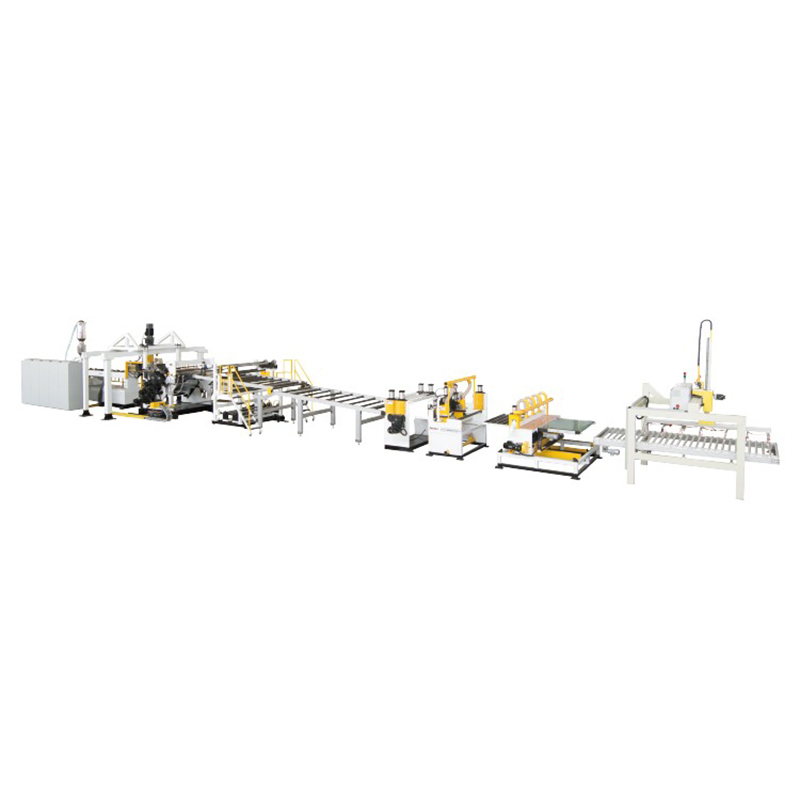
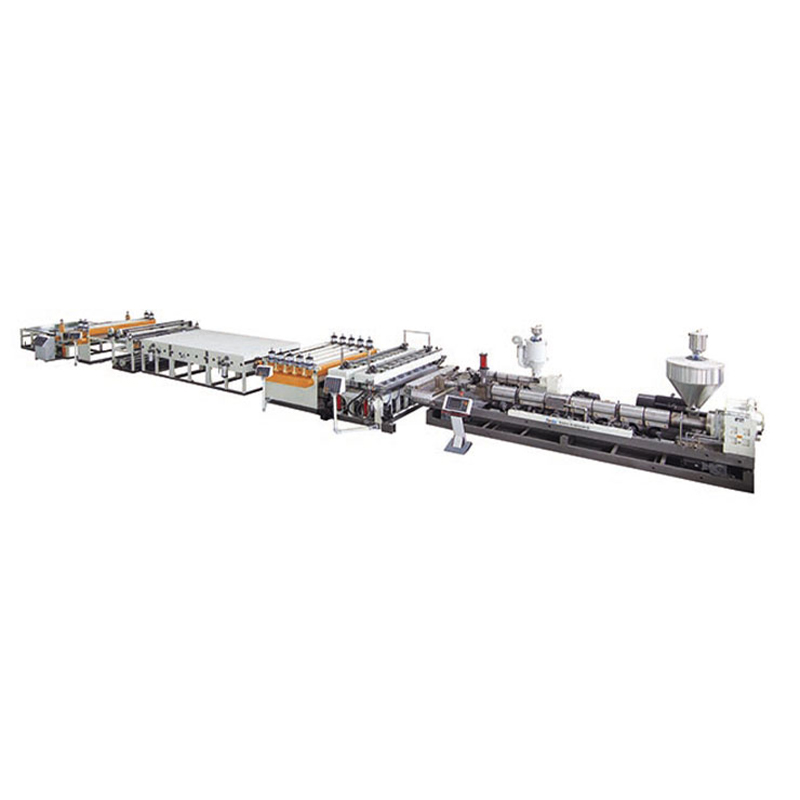
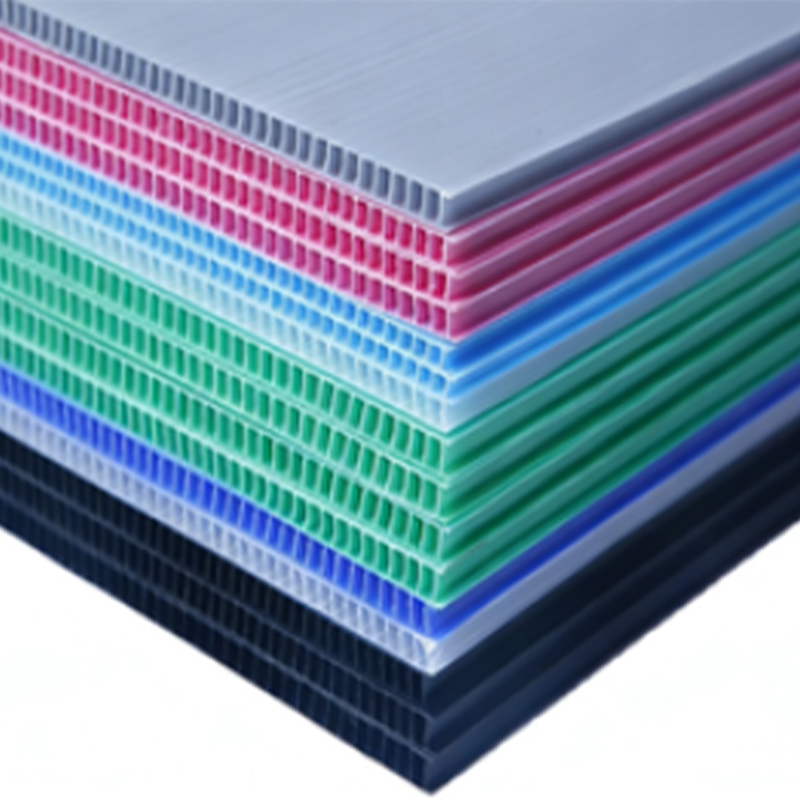
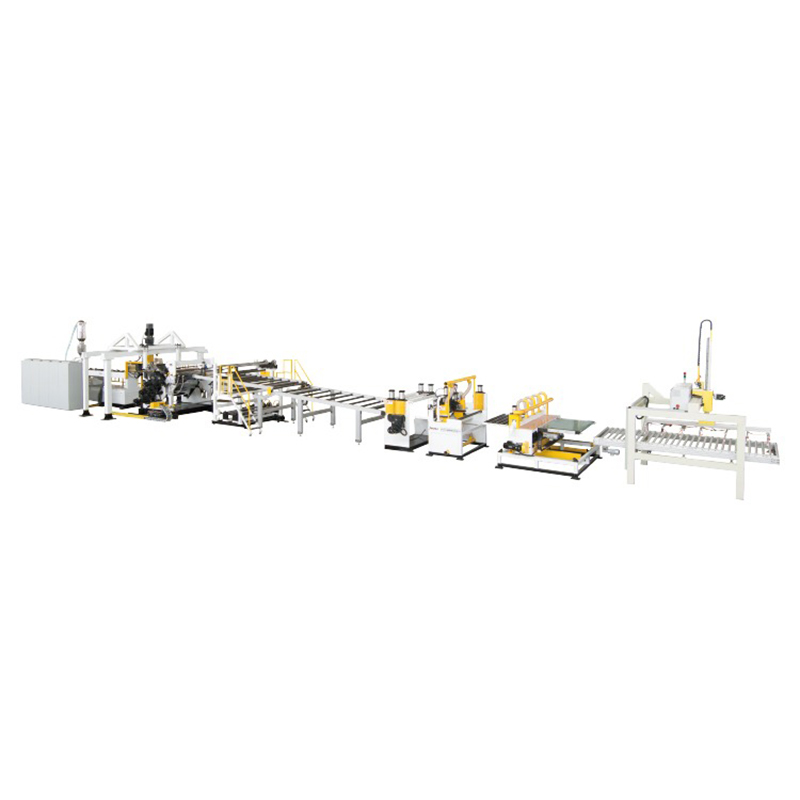
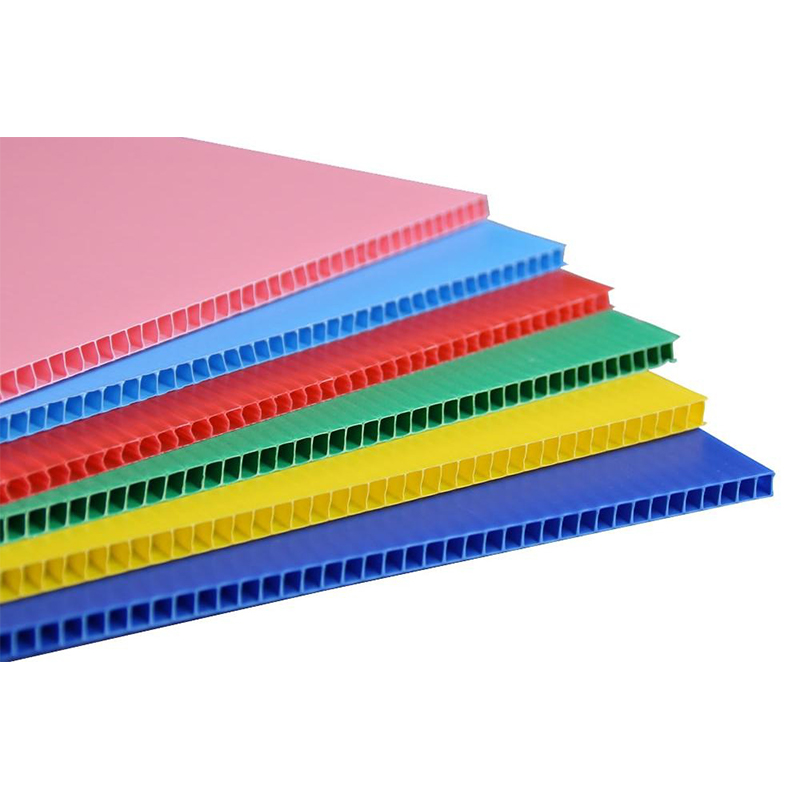
Jwell's PP hollow sheet extrusion line is used for continuous production of lightweight, high-strength polypropylene hollow sheets. These sheets feature a porous or honeycomb internal structure, significantly reducing weight while maintaining rigidity—making them an ideal substitute for corrugated cardboard, plywood, and even some aluminum sheets.
1. Construction Formwork (Green Construction)
Using the JWs150(80)-2000 twin-output construction formwork line, it can produce PP hollow construction formwork with width of 915mm×2 and thickness of 15–17mm. The equipment output is 550–600 kg/h, and the twin-die extrudes two formwork sheets at once, achieving extremely high efficiency.
Real case: A large residential project (30-story high-rise building) used PP hollow formwork to replace traditional wooden formwork. Results showed:
Wooden formwork averaged 5–8 reuses beforeScrapped, while PP formwork can be reused over 150 times.
No need for release agent; the formwork releases by tapping, and the concrete surface achieves fair-faced concrete standard flatness.
Completely non-absorbent, no deformation during rainy construction.
In the end,, the cost per square meter of formwork dropped by about 60%.
This material is also suitable for bridges, tunnels, retaining walls, hydraulic engineering, and other scenarios requiring high-durability formwork.
2. Reusable Logistics Packaging
Sheets produced by hollow sheet extrusion lines (e.g., JWs100/100/100 honeycomb sheet line, output 600–700 kg/h, thickness 2–20mm, width 1200–2000mm) are widely used for:
Foldable returnable totes
Partitions and dividers
Anti-static packaging boxes (by co-extruding an anti-static layer)
Real case: An automotive parts supplier replaced all single-use corrugated cardboard boxes with PP hollow sheet returnable bins. The service life of a single packaging box increased from 1 time to over 300 times, reducing annual waste packaging by more than 200 tons and lowering total packaging cost by 45%.
3. Advertising & Display
The Ø120, Ø45 model production line (suitable for PC, PP, PE materials, thickness 4–40mm, width 2100mm, output 450 kg/h) can produce PC solid/sheet or PP hollow sheet for:
Outdoor billboards, lightboxes
Exhibition stands, POP displays
Political campaign signs
PC sheets have excellent weatherability, UV resistance, and impact resistance, with an outdoor service life of over 10 years.
4. Agriculture & Horticulture
PP/PC hollow sheets are used as:
Greenhouse covering sheets (light-transmitting, heat-retaining, anti-condensation)
Wind barriers
Seedling trays
PC solid sheet (hollow structure) has 30% better thermal insulation than glass and weighs only 1/12 of glass, significantly reducing installation and maintenance costs.
Ultra-high output, fast payback
JWs150(80)-2000: 550–600 kg/h
JWs100/100/100 (honeycomb sheet): 600–700 kg/h
Taking construction formwork as an example: a single day (10 hours) can produce approximately 450–500 sheets of 915mm wide, 17mm thick formwork, equivalent to over 1000 m².
Twin-output technology (energy and space saving)
The JWs150(80)-2000 uses a twin-die: extruding two 915mm sheets at once, but occupying only about 60% of the floor space and energy consumption of two single-output lines. Compared to conventional single-output lines (output approx. 250–300 kg/h), the twin-output line doubles production with only about 30–40% more energy consumption.
Multi-material compatibility
Ø120, Ø45 models: can produce PC, PP, PE hollow sheets.
Supports co-extrusion: adding anti-static, flame-retardant, anti-aging, UV absorption, and other functional layers.
Optional corona treatment: increases surface tension for easier printing, lamination, and bonding.
High precision and high stability
Key components include:
Hydraulic screen changer (non-stop screen change, reduces impurities)
Melt gear pump (precise flow control, ensures uniform thickness)
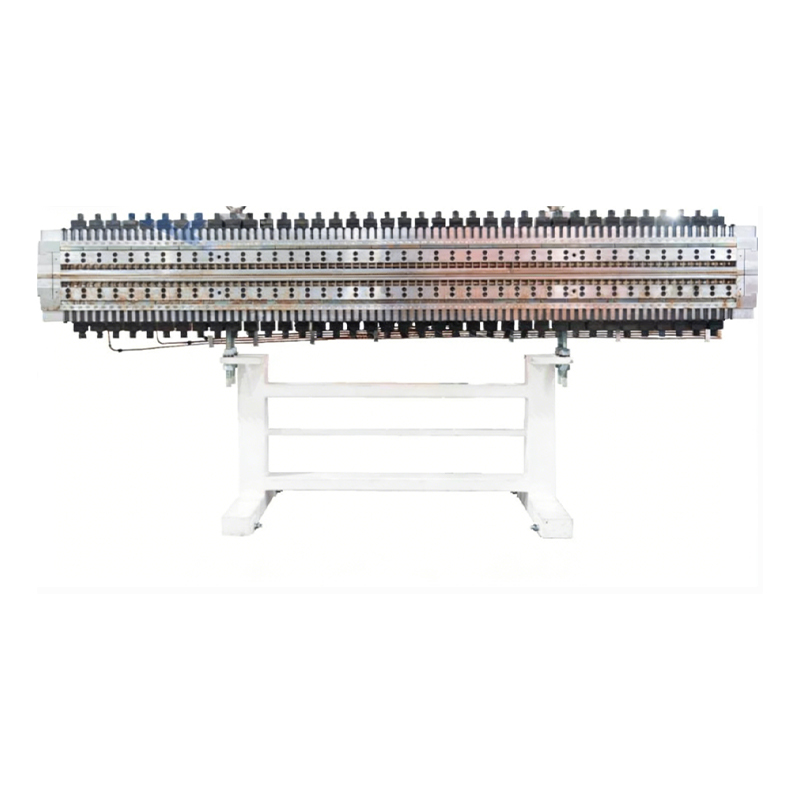
Alloy steel T-die (with high-activity throttling device, uniform distribution)
Two-stage vacuum calibrating table (rapid heat exchange, precise shaping)
Annealing furnace (eliminates internal stress, improves flatness)
Siemens PLC-controlled servo cut-off saw (fixed-length cutting, accuracy ±1mm)
1. Incoming Material Inspection
Melt Flow Rate (MFR): ensures PP/PC resin flowability meets extrusion requirements.
Moisture content: tested with moisture analyzer; exceeding 0.05% causes bubbles and silver streaks.
Appearance: check for black specks, impurities, color difference in raw materials.
Density: verifies material grade consistency.
2. In-line Process Monitoring
In-line thickness measurement: β-ray or infrared thickness gauge continuously scans full width; automatically alarms and provides feedback adjustment when deviation exceeds tolerance.
Melt temperature and pressure sensors: monitor pressures at extruder zones and die head to ensure uniform plasticization.
Visual inspection system (optional): automatically identifies surface scratches, gel spots, melt fracture.
3. Finished Product Testing (per ISO 15013 or ASTM standards)
|
Test Item |
Method Standard |
Equipment |
|
Thickness uniformity |
ISO 4593 / ASTM D374 |
Micrometer, in-line thickness gauge |
|
Width, length |
ASTM D5947 |
Steel ruler/tape measure |
|
Tensile strength/elongation at break |
ISO 527-3 / ASTM D638 |
Universal testing machine |
|
Flexural strength/modulus |
ISO 178 / ASTM D790 |
Universal testing machine |
|
Impact strength (Izod/Charpy) |
ASTM D256 / ISO 179 |
Impact tester |
|
Dart drop impact |
ISO 7765 / ASTM D1709 |
Dart drop impact tester |
|
Heat shrinkage (120–150°C) |
In-house or customer spec |
Constant temperature oven |
|
Vicat softening point |
ISO 306 / ASTM D1525 |
HDT/Vicat tester |
|
Appearance inspection |
Standard light source |
Check for bubbles, delamination, black specks, scratches, gloss differences |
|
Color consistency |
Spectrophotometer |
Color difference ΔE ≤ 0.5 (typical) |
Q1: How many construction formwork sheets can the JWs150(80)-2000 twin-output line produce per day?
Based on 550 kg/h, sheet density approx. 0.55 g/cm³, thickness 17mm, width 915mm, each meter of sheet weighs about 8.56 kg. Hourly output is about 64 meters, equivalent to about 70 sheets of 915×915mm. An 10-hour shift can produce about 700 sheets. In actual production, considering downtime for roll changes, screen changes, etc., daily output is typically 500–600 sheets.
Q2: Besides PP, what other materials can be produced?
Ø120, Ø45 models: PC, PP, PE
JWs150(80)-2000 (construction formwork line): dedicated to PP and modified PP (e.g., glass fiber reinforced, calcium carbonate reinforced)
JWs100/100/100 (honeycomb sheet line): PP
Q3: How many times can PP hollow construction formwork be reused?
Under normal construction conditions (residential, commercial buildings): 100–150 times; under harsh conditions (coarse aggregate impact, high-frequency vibration): over 50 times. In comparison, wooden formwork typically can only be used 5–8 times.
Q4: Can scrap and old sheets be recycled?
Yes. PP hollow sheet is 100% recyclable.
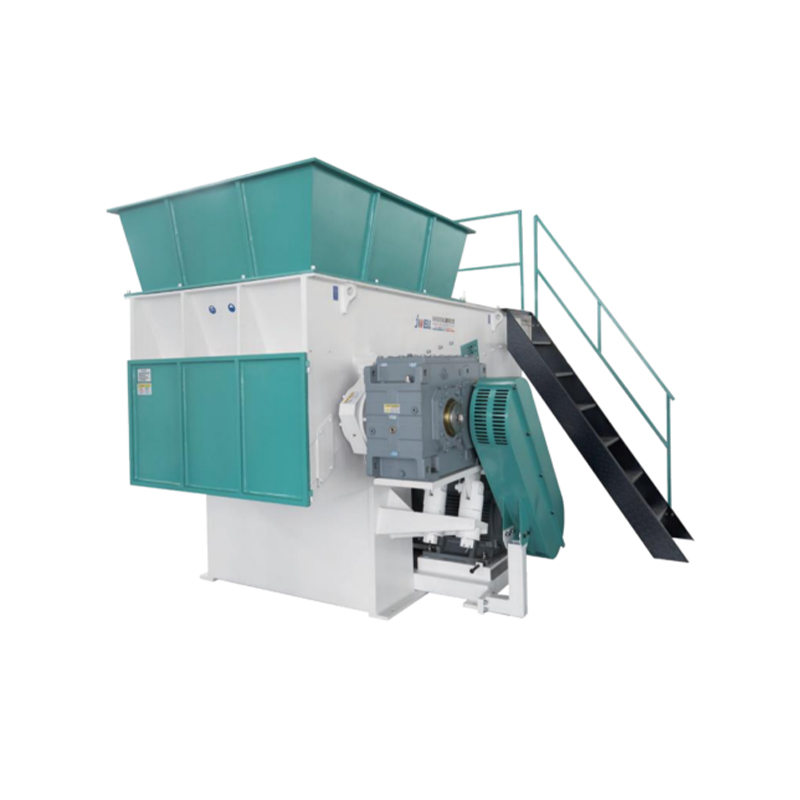
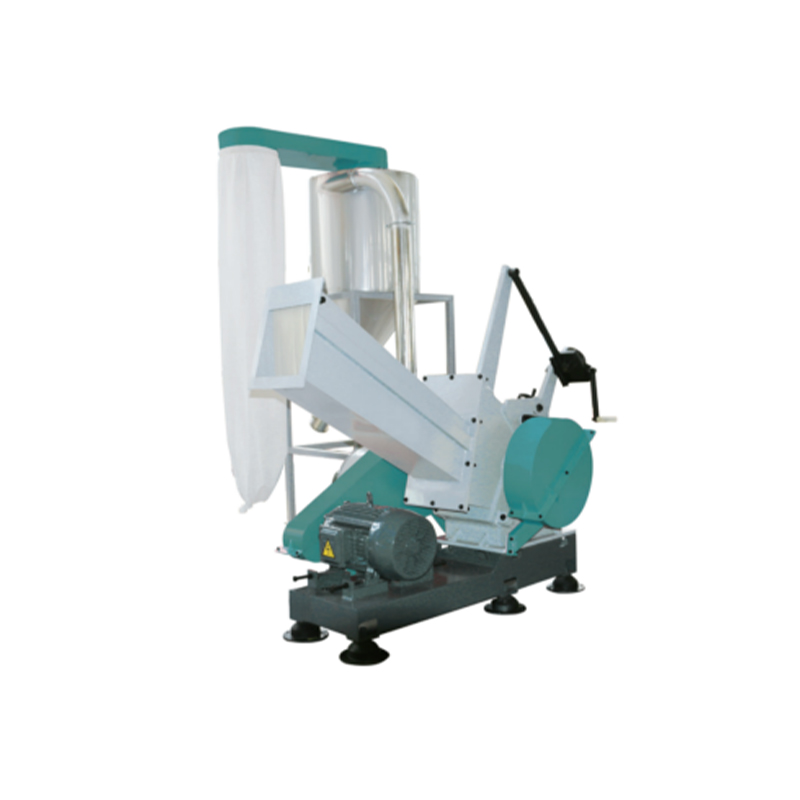
Edge trim and start-up waste can be immediately shredded in-line and fed back into the extruder.
After cleaning, shredding, and pelletizing, old formwork can be reused to produce new sheets, with a recovery rate of over 95%.
Q5: What thickness range can be produced?
Construction formwork twin-output line: 15–17 mm
PC/PP/PE hollow sheet line (Ø120, Ø45): 4–40 mm
PP honeycomb sheet line (JWs100/100/100): 2–20 mm
Q6: What are the advantages of twin-output technology over single-output?
Twin-output line produces two 915mm sheets at once; single-output produces only one.
Double the output for the same floor space; energy consumption per unit product reduced by 30–40%.
Same number of operators; labor cost halved.
Q7: What is the maximum sheet width?
Twin-output construction formwork line: single sheet 915mm, two side by side
PC/PP/PE line: max 2100 mm
Honeycomb sheet line: 1200–2000 mm
For extra-wide requirements, the manufacturer can customize a 3500mm ultra-wide line (for large packaging or industrial sheets).
Q8: Common production faults and solutions
|
Fault |
Possible cause |
Solution |
|
Sheet bending/warping |
Excessive take-off speed or uneven cooling |
Adjust puller speed and calibrating cooling water temperature |
|
Uneven surface (orange peel) |
Melt pressure fluctuation, unstable temperature |
Check gear pump, zone temperatures; increase vacuum |
|
Sheet breakage |
Material shortage, conveyor belt slipping |
Check hopper feed, tension conveyor belt |
|
Die clogging |
Excessive feed rate, impurities in material |
Reduce feed rate, check screen changer |
|
Poor plasticization (granules) |
Low temperature, excessive screw speed |
Increase zone temperatures, reduce screw speed |
Q9: What certifications does the production line have?
CE certification (EU market access)
ISO 9001 quality management system
TUV safety certification (optional)
UL or GMP certification available upon request
Q10: What after-sales service is provided?
12 months whole-machine warranty
Lifetime technical support
Common spare parts dispatched within 24 hours





Tel: +86-19579950928

E-mail: [email protected]

Company Address
No. 128 Qingfeng Road, Xieqiao Town, Haining City, Jiaxing City, Zhejiang Province

19579950928

 English