
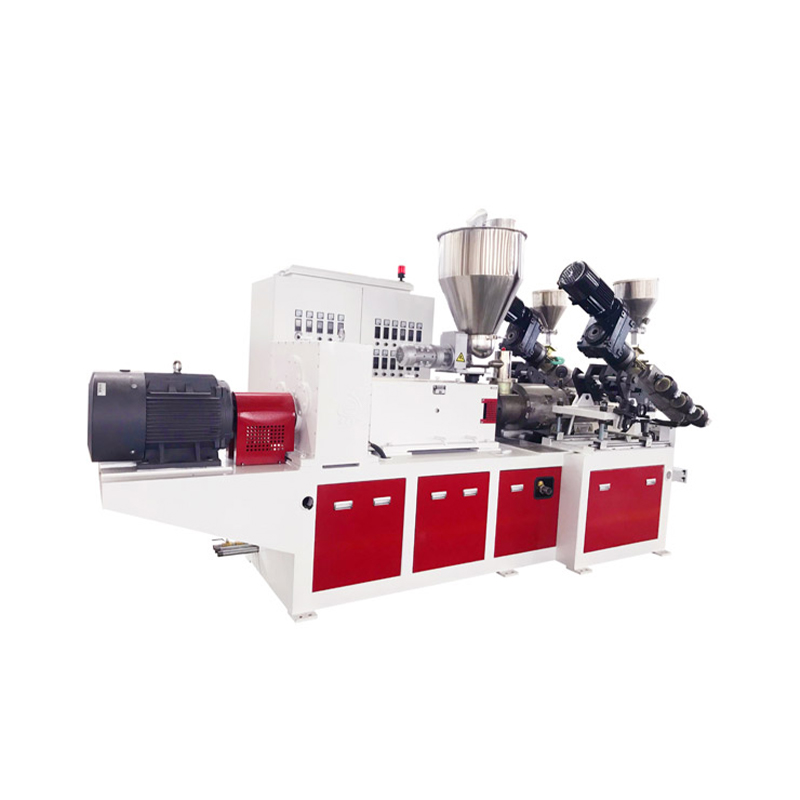
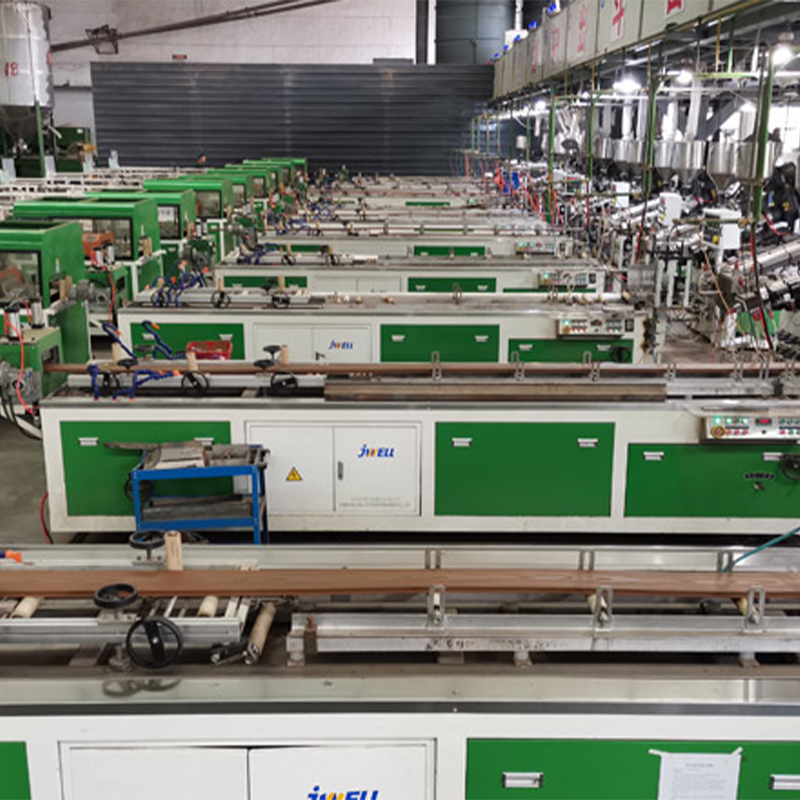
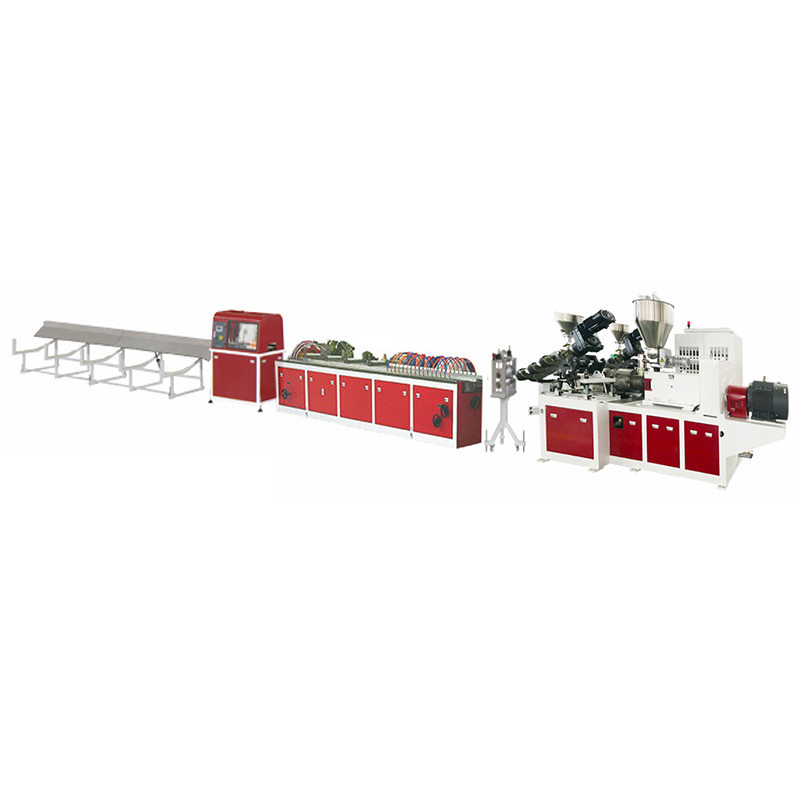
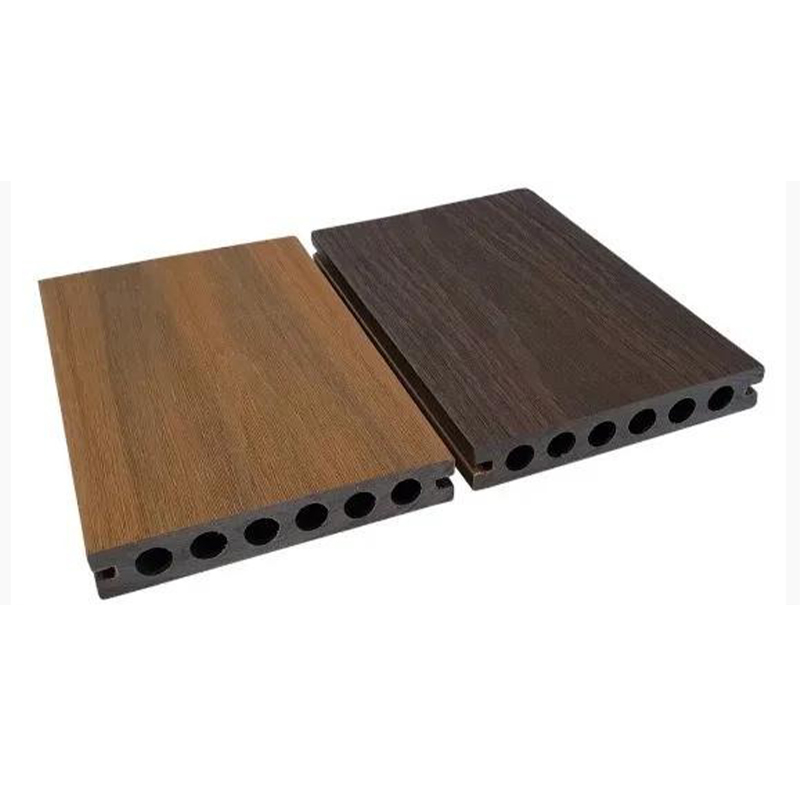
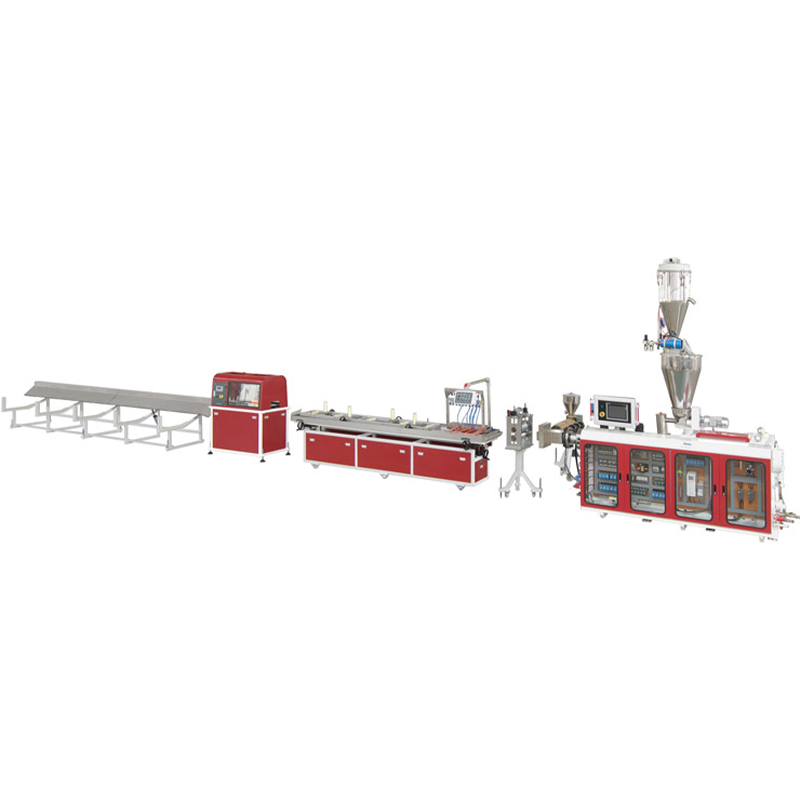
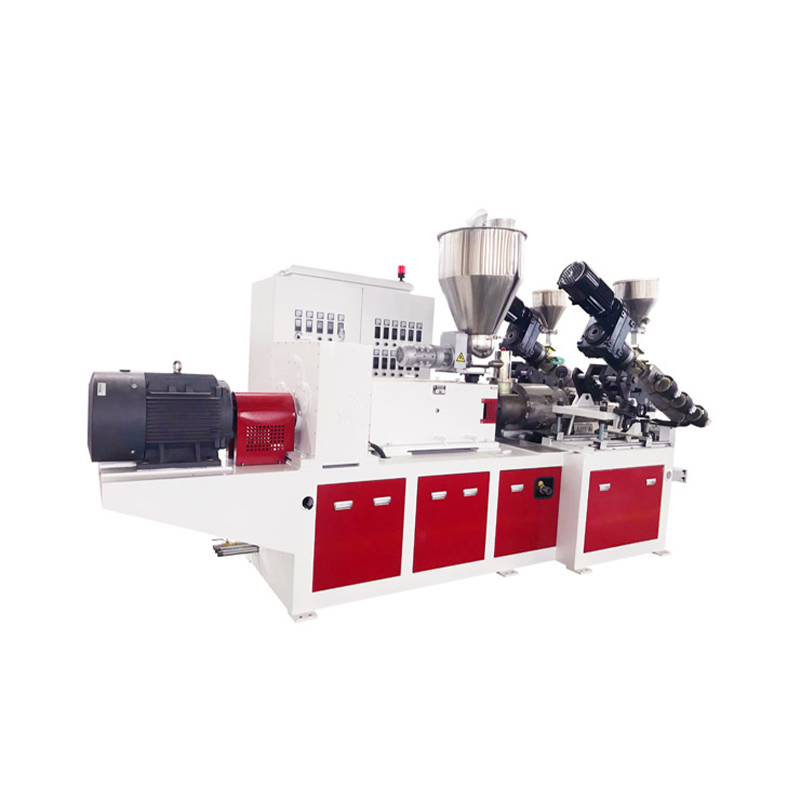
Jwell's WPC Profile Extrusion Line is specifically designed for efficient production of wood-plastic composite profiles, used in decking, fencing, railings, cladding, and landscape lumber. The line is compatible with PE, PP, and PVC resin bases and supports various formulations mixed with natural plant fibers (such as wood flour, bamboo flour, and rice husk).
WPC profiles produced by these lines are widely used for:
Outdoor decking & flooring – anti-slip, weather-resistant, low maintenance.
Fencing & privacy screens – UV-resistant, impact-resistant, easy to install.
Railing systems – for balconies, gardens, and public walkways.
Cladding & wall panels – modern architectural facades with a wood-like appearance.
Landscape lumber & park benches – resistant to moisture, insects, and rot.
Real case: A Dutch garden material supplier uses our SJ72 line to produce hollow decking profiles (140×25 mm) with a stable output of 210 kg/h. The line runs 20 hours per day with a scrap rate below 2%, saving 30% in raw material costs compared to solid PVC profiles.
2.1 High Torque & High Filling Capacity
The SJZ series conical twin-screw extruders provide excellent mixing and plasticizing capability.
SJ65 (37 kW) – suitable for small to medium batch production, e.g., narrow decking boards or decorative trim.
SJ72 (45 kW) – optimal balance between power and energy efficiency for standard WPC profiles.
SJ80 (156 kW) – high torque margin for high-filling formulations (up to 60% wood fiber) and large cross-section profiles (e.g., 200 mm wide decking).
2.2 Wide Output Range
From 150 to 350 kg/h, you can select the appropriate model according to order volume. The SJ72 covers the most common range (160–250 kg/h), while the SJ80 meets high-volume production needs with lower energy consumption per kg of product.
2.3 Stable Profile Dimensions
The conical screw design minimizes temperature fluctuations and pressure pulsation – critical for WPC materials that tend to swell or warp. Typical dimensional tolerance: ±0.2 mm for a 40 mm thick decking board.
2.4 Energy-Efficient Drive
All models use AC frequency drives. According to actual field measurements, the SJ72 consumes only 0.22 kWh per kg of finished profile – 15% lower than many single-screw alternatives.
We implement a four-stage quality system to ensure consistent output from every WPC profile extrusion line.
|
Stage |
Operation |
Instrument / Method |
Acceptance Standard |
|
Raw materials |
Check moisture content of wood flour and plastic pellets |
Halogen moisture analyzer |
Wood flour <2%, HDPE/PP <0.3% |
|
Process control |
Melt pressure and temperature monitoring |
Pressure sensor (max 400 bar), thermocouple |
Pressure fluctuation ≤ ±3 bar; temperature ±2 °C |
|
Profile sampling |
Measure dimensions, surface, density every 2 hours |
Laser gauge, digital caliper, densitometer |
Width ±0.3 mm, thickness ±0.2 mm; density 1.2–1.4 g/cm³ |
|
Final testing |
Simulated aging, water absorption, flexural strength |
UV aging tester, water bath, universal testing machine |
ΔE ≤2 after 500 h UV; water absorption <1.5%; flexural strength ≥25 MPa |
Real case: A Canadian WPC decking manufacturer using the SJ80 line reported that after installing our online pressure monitoring system, the profile warpage rate dropped from 4.2% to 0.8% within one month.
|
Model |
Customer Location |
Main Product |
Output (kg/h) |
Energy Consumption |
Operating Years |
|
SJ65 |
Poland |
Window trim profiles |
165 |
0.25 kWh/kg |
3 years (original screws) |
|
SJ72 |
Vietnam |
Hollow decking (135×23 mm) |
220 |
0.21 kWh/kg |
2 years |
|
SJ80 |
USA (Texas) |
Solid railing profiles (90×90 mm) |
330 |
0.19 kWh/kg |
1.5 years |
The US customer reported that the SJ80 line paid for itself within 11 months, mainly due to lower material costs (using recycled HDPE + 58% wood flour) and reduced energy consumption.
Product Specifications
|
Item
|
Specification
|
|
Place of origin
|
China
|
|
Brand name
|
JWELL
|
|
Model number
|
SJZ65/132 80/156 72/152
|
|
Certification
|
CE ISO
|
|
Minimum order quantity
|
1 SET
|
|
Packaging details
|
Wooden pallet packing
|
|
Delivery time
|
60days
|
|
Payment terms
|
TT. LC
|
Product Parameters:
|
Model
|
SJ65
|
SJ72
|
SJ80
|
|
Extruder model
|
SJZ65/132
|
SJZ72/152
|
SJZ80/156
|
|
Main motor power (kW)
|
37
|
45
|
156
|
|
Capacity (kg/h)
|
150-180
|
160-250
|
200-350
|
Q1: Can I produce both solid and hollow profiles on the same line?
A: Yes. The SJ65, SJ72, and SJ80 can all work with different molds and calibration tables. For hollow profiles (e.g., 4-cavity decking), we recommend the SJ72 or SJ80 because they provide higher melt pressure to fully fill thin ribs. Quick mold change takes about 45 minutes.
Q2: What typical wood-to-plastic ratios can these extruders handle?
A:
SJ65: up to 50% wood fiber (by weight)
SJ72: up to 55%
SJ80: up to 60% (thanks to the 156 kW motor and larger screw channels)
Higher wood flour content reduces material cost but requires better cooling. We equip high-filling formulations with a 12-meter vacuum calibration tank.
Q3: How do you control warpage of profiles after cooling?
A: Warpage is mainly caused by uneven cooling or internal stress. Our lines include:
6-zone vacuum calibration sleeve with independent water flow control
4-meter spray cooling tank with adjustable nozzles
Servo-driven caterpillar haul-off that maintains constant tension (tension range 0–5000 N)
For the SJ80, we also add an online laser straightness sensor that automatically adjusts haul-off speed when deviation exceeds 1.5 mm/m.
Q4: What is the average energy consumption per kg of finished product?
A: Based on customer reports (continuous 8-hour operation):
SJ65: approx. 0.24 kWh/kg
SJ72: approx. 0.22 kWh/kg
SJ80: approx. 0.20 kWh/kg (lower due to higher output, spreading fixed costs)
These values assume a typical WPC formulation: 55% wood flour, 40% HDPE, 5% additives.
Q5: Do you provide complete lines including mixing, feeding, and downstream equipment?
A: Yes. Each extrusion line includes:
Automatic batch mixer (500 L or 1000 L)
Volumetric or gravimetric feeder (±0.5% accuracy)
Extruder + die
Vacuum calibration table (6 m / 8 m / 12 m)
Spray cooling tank (4 m / 6 m)
Haul-off unit (caterpillar type)
Flying cut-off saw with dust collection
Tilted discharge conveyor
For the SJ80, we also offer an optional fully automatic stacking robot for heavy decking profiles (up to 6 m long, 15 kg each).





Tel: +86-19579950928

E-mail: [email protected]

Company Address
No. 128 Qingfeng Road, Xieqiao Town, Haining City, Jiaxing City, Zhejiang Province

19579950928

 English