
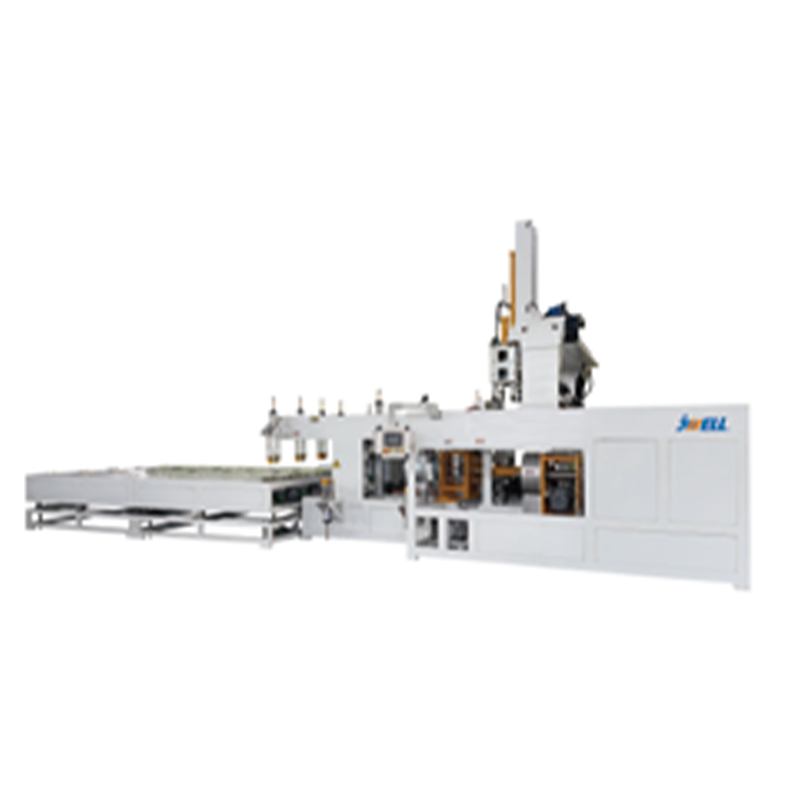
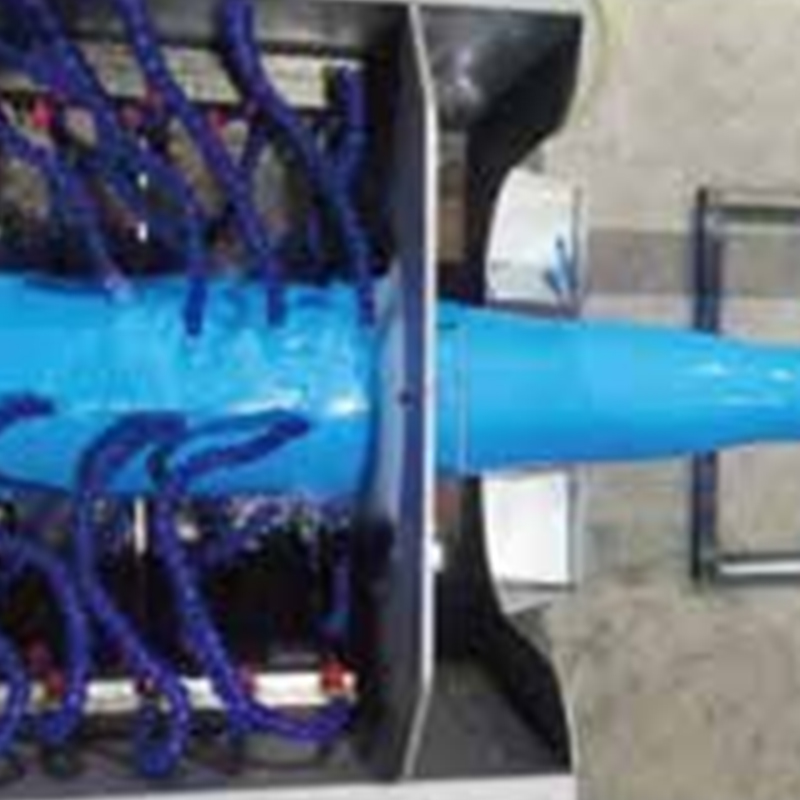
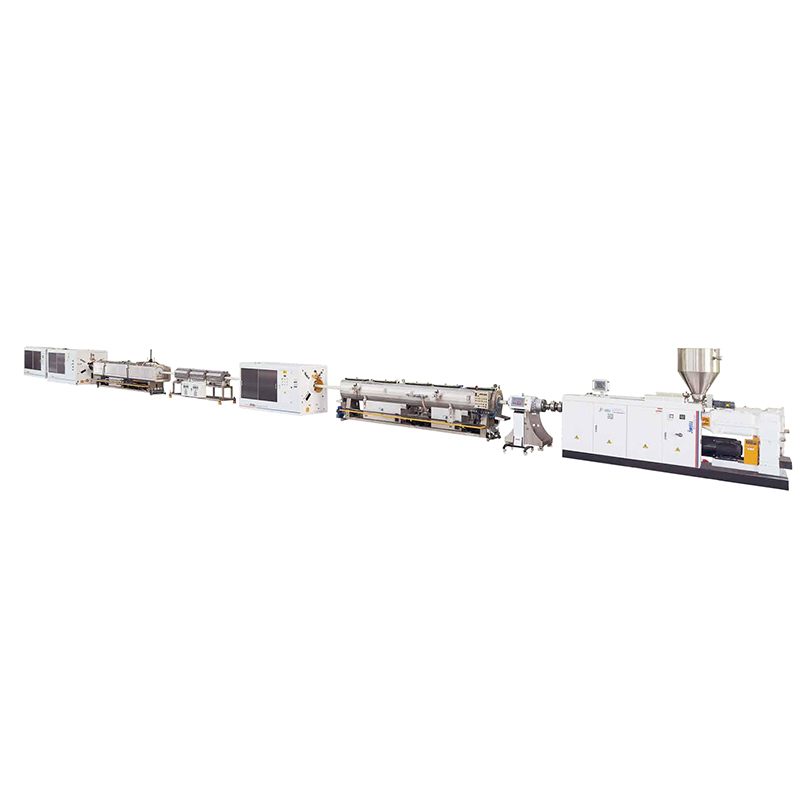
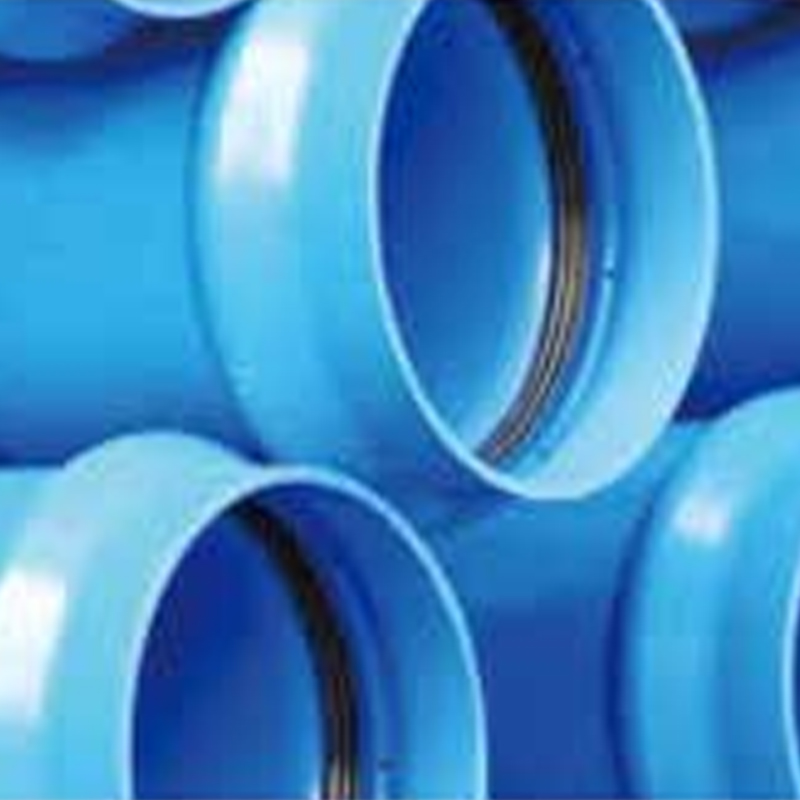
Jwell's PVC-O pipe extrusion line (SJP series) is designed for the continuous and efficient production of biaxially oriented polyvinyl chloride pressure pipes, covering a full diameter range from Φ90mm to Φ800mm. Based on a flexible process combining one-step and two-step methods, this production line meets the stringent requirements of municipal water supply, agricultural irrigation, industrial fluid transportation, and sewage pressure pipelines.
PVC-O pipes produced by this line are widely used in pressure water systems where durability and hydraulic efficiency are critical.
Municipal water supply mains (Φ315-630mm: suitable for urban pipe networks)
Irrigation projects (Φ90-250mm: for farmland in arid regions)
Industrial fluid transportation (Φ450-800mm: cooling water, slurry pipelines)
Sewage pressure pipelines (benefiting from high impact resistance and fatigue resistance)
Real case:
A municipal project in Southeast Asia used the SJP114-37 line (Φ450-800mm, two-step method) to replace aging asbestos-cement pipes. Result: installation speed increased by 40%, design life of 50 years, zero leaks in the first three years of operation.
A. Wide diameter range – one line for multiple needs
From Φ90mm service connection pipes to Φ800mm mains, the same series of extruders (SJP78, SJP93, SJP114) covers 90% of market demands. No need to purchase multiple lines from different suppliers.
B. Flexible production methods (one-step and two-step)
One-step method (Φ90–400mm): Continuous production from raw material to finished pipe. Lower labor cost, smaller footprint.
Two-step method (Φ450–800mm): Separate orientation stage for extra-large diameters. Better molecular alignment and burst strength.
Real case:
A pipe manufacturer in the Middle East used the SJP93-37 one-step method to produce Φ160-400mm pipes (500 kg/h output) for its standard water supply lines. When a large-diameter order (Φ630mm) came in, they switched the same line to two-step mode – achieving 800 kg/h output without purchasing a second extruder.
C. Energy-efficient motor power configuration
Note the motor power:
45 KW for 300 kg/h (Φ90-250) → 6.7 kg/kWh
79 KW for 500 kg/h (Φ160-400) → 6.3 kg/kWh
118 KW for 900 kg/h (Φ450-800) → 7.6 kg/kWh
This is 10–15% more efficient than conventional twin-screw extruders of the same class, directly reducing your electricity bill.
D.Proven actual production reliability
The outputs shown in the table are real sustained outputs – not exaggerated theoretical values. For example, in a water plant project in Brazil, the SJP114-37 produced Φ800mm pipes at 900 kg/h, running 24/7 for 18 months; the output data has been validated.
We follow strict ISO 16422 (PVC-O pipe standard) compliance protocols. Each batch of pipes is traceable.
Incoming raw material quality control
K-value test (PVC resin)
Moisture content (<0.3%)
Thermal stability (Metrastat test)
Online monitoring (during extrusion)
Ultrasonic wall thickness scanner – continuous, non-destructive. Tolerance: ±0.1mm.
Melt temperature and pressure sensors – alarm on deviation.
Concentricity controller – ensures uniform orientation.
Post-production mechanical testing
|
Test item |
Standard |
Acceptance criteria |
|
Impact resistance (R-type chisel) |
ISO 9854 |
No rupture at 0°C, 4J impact |
|
Burst pressure |
ISO 1167 |
>4 times rated pressure |
|
Slow crack growth |
ISO 13479 |
>1000 hours at 80°C, 4.8MPa |
|
Degree of orientation |
Dichloromethane test |
>45% (gravimetric method) |
Real case:
A German water authority required independent third-party testing. The Φ315mm pipes produced by our SJP93-37 line passed the slow crack growth test for 2,100 hours – twice the standard requirement.
|
Caliber range (mm)
|
Extruder model
|
Main motor power (KW)
|
Output (KG/H)
|
Production method
|
|
Φ90-250
|
SJP78-33
|
45
|
300
|
One-step process
|
|
Φ110-315
|
SJP93-37
|
79
|
450
|
One-step process
|
|
Φ160-400
|
SJP93-37
|
79
|
500
|
One-step process
|
|
Φ315-630
|
SJP114-37
|
118
|
800
|
One/two-step process
|
|
Φ450-800
|
SJP114-37
|
118
|
900
|
Two-step process
|
Q1: What is the difference between one-step and two-step methods for the same SJP114-37 line?
A: In one-step mode, orientation takes place immediately after extrusion (suitable for Φ315-500mm). In two-step mode, the pipe is reheated to orientation temperature in a separate oven (suitable for Φ500-800mm). Two-step achieves a higher expansion ratio but lower output. Your line can run both ways – just change the die head and downstream cooling equipment.
Q2: Can I produce standard PVC-U pipes with this line?
A: No. PVC-O requires a specific orientation stage. However, you can produce different diameters of PVC-O pipes by changing the sizing sleeve and tooling (changeover time typically 2–3 hours).
Q3: Is the 900 kg/h output for Φ800mm shown in the table real or peak?
A: This is the sustained net output at 90% motor load using standard PVC-O compound (density 1.45 g/cm³). Short-term peak output can reach 1050 kg/h, but we recommend running 24/7 continuous production at the values shown in the table.
Q4: What is the typical power consumption per ton of product?
A: Based on field data:
For 300 kg/h line: approx. 150 kWh/ton
For 900 kg/h line: approx. 130 kWh/ton
This is about 20% lower than comparable PO (polyolefin) lines.
Q5: How does impact resistance compare to PVC-U or HDPE?
A: At the same wall thickness, PVC-O is 3–5 times tougher than PVC-U. Compared to HDPE, PVC-O offers better ring stiffness (SN 10,000 vs SN 6,300 for the same diameter) and requires no cathodic protection.
Real case:
An Australian mining customer buried Φ630mm PVC-O pipes under a haul road with only 0.8m of soil cover. Daily 100-ton truck traffic caused no visible deformation after two years – HDPE pipes at the same site failed within 8 months.





Tel: +86-19579950928

E-mail: [email protected]

Company Address
No. 128 Qingfeng Road, Xieqiao Town, Haining City, Jiaxing City, Zhejiang Province

19579950928

 English