
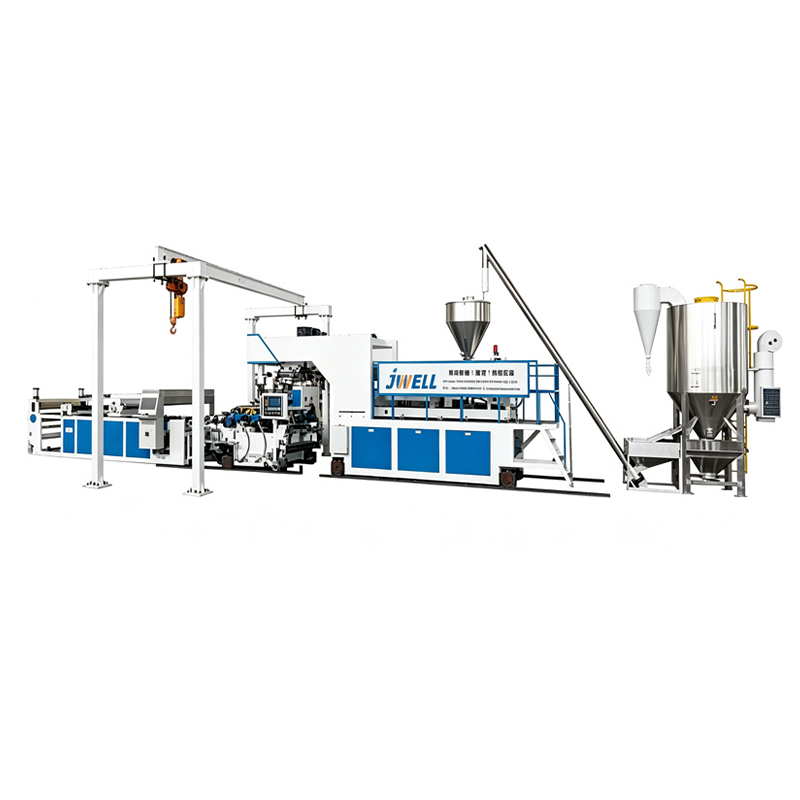
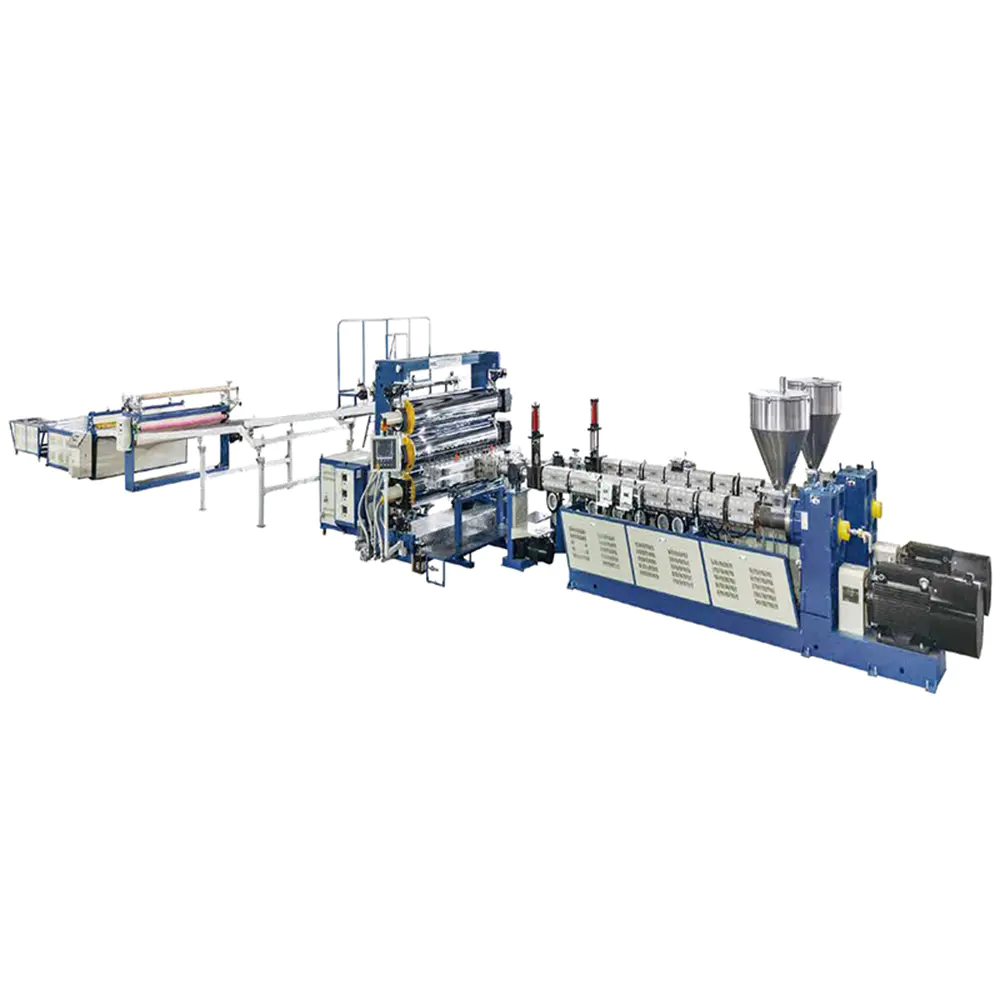
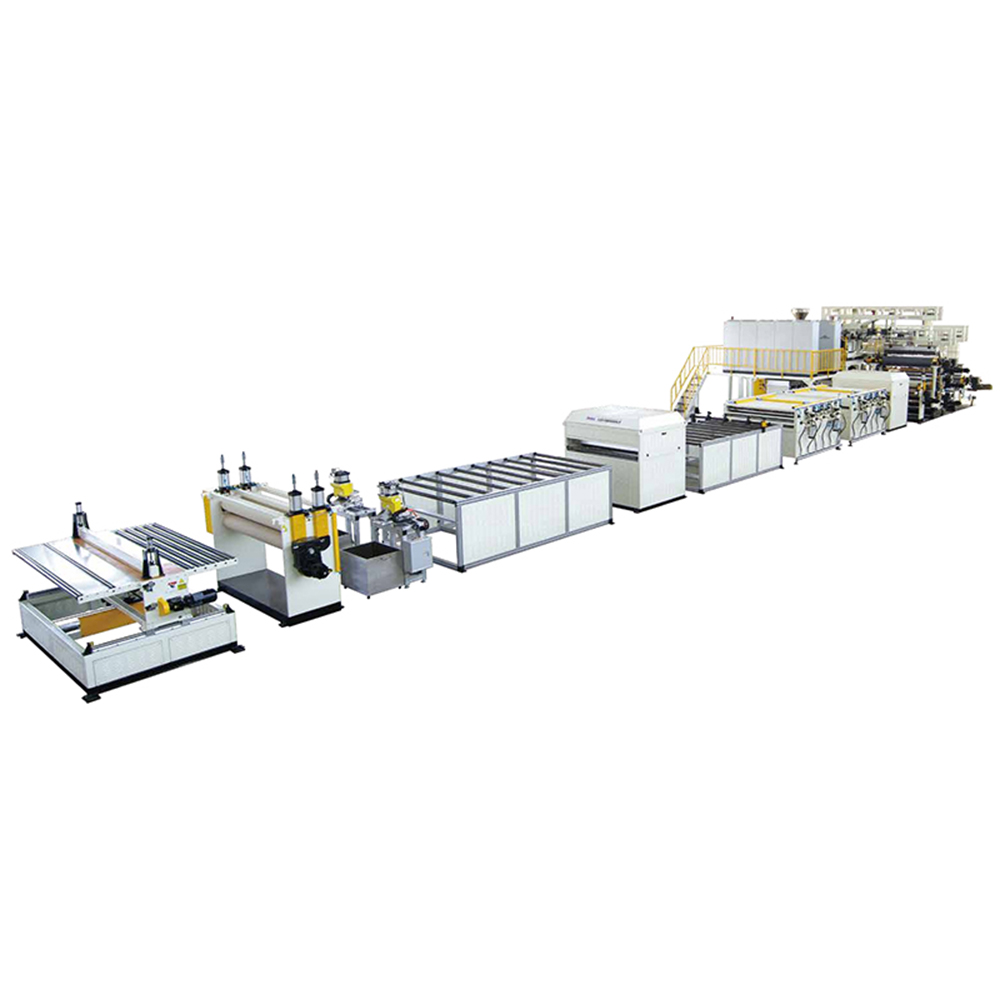
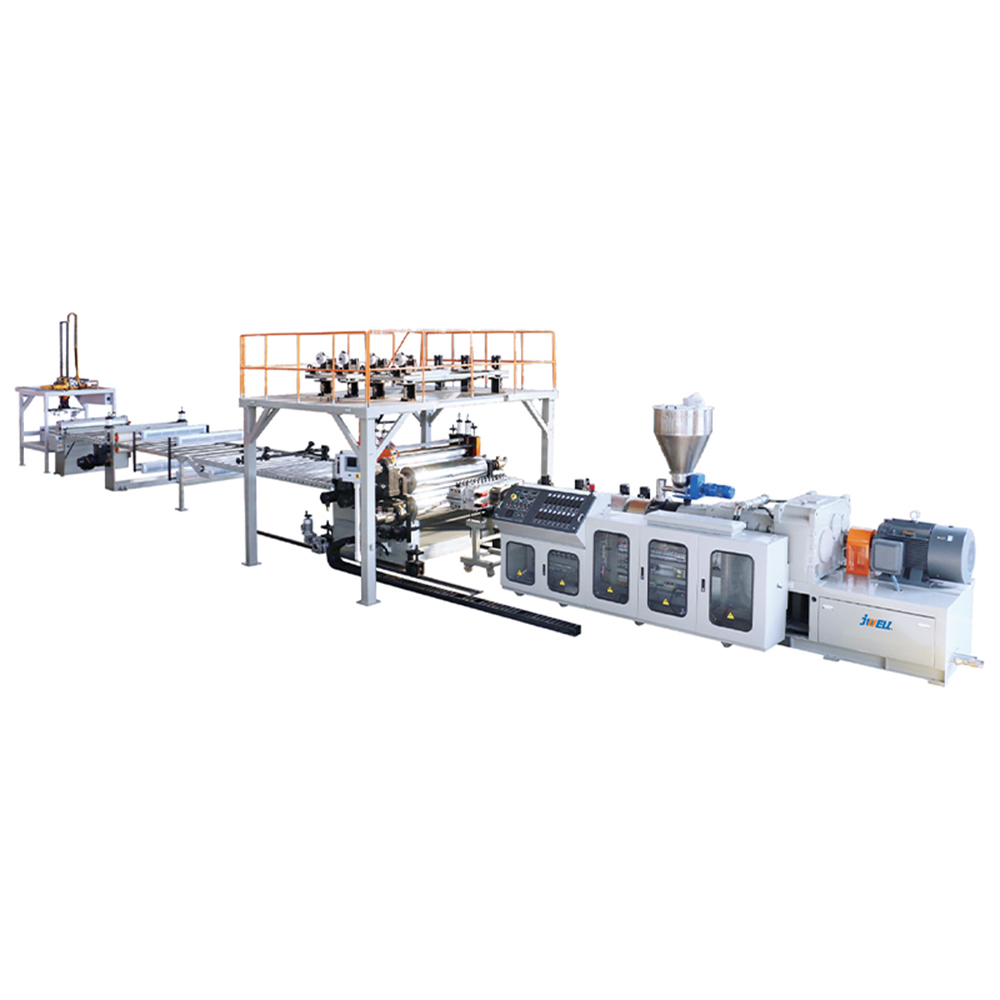
Food goes stale for one reason above all: oxygen gets in. A single-layer sheet cannot stop it. A five-layer sheet can, if each layer is given a job and the layers stay where they were put. The Multi-Layer Sheet Co-Extrusion Line exists to build that structure in one pass, without adhesive and without a secondary lamination step.
EVOH is the barrier. It blocks oxygen and aroma better than any common polymer at the same thickness. It also absorbs moisture and loses its barrier property when it gets wet. That weakness is the reason the EVOH sits in the middle and never on the surface.
The two PP skins keep the water away from the core. The two EVA layers sit between the PP and the EVOH and bond the two together, because PP and EVOH do not stick to each other on their own. Five layers, five jobs. Remove any one of them and the sheet stops working.
The layer order is fixed in the feedblock. The five extruders melt their own polymer and push it into the feedblock, which stacks the streams before the die ever sees them. If the feedblock is designed wrong, the EVOH core thins at the edges of the sheet and the barrier drops there first. That is where the leak shows up.
The die then spreads the stack to the full width without letting the layers mix. A dead spot in the manifold lets one polymer sit and degrade, and a black speck ends up in the sheet. In barrier film, a black speck is not a cosmetic problem. It is a pinhole.
Each layer has a thickness that corresponds to its job. The EVOH layer might be a few microns. The PP skins might be ten times that. If the EVOH drifts below its minimum, the barrier fails even though the sheet still looks fine. Thickness gauging and feedback to the die keep the ratio where it belongs.
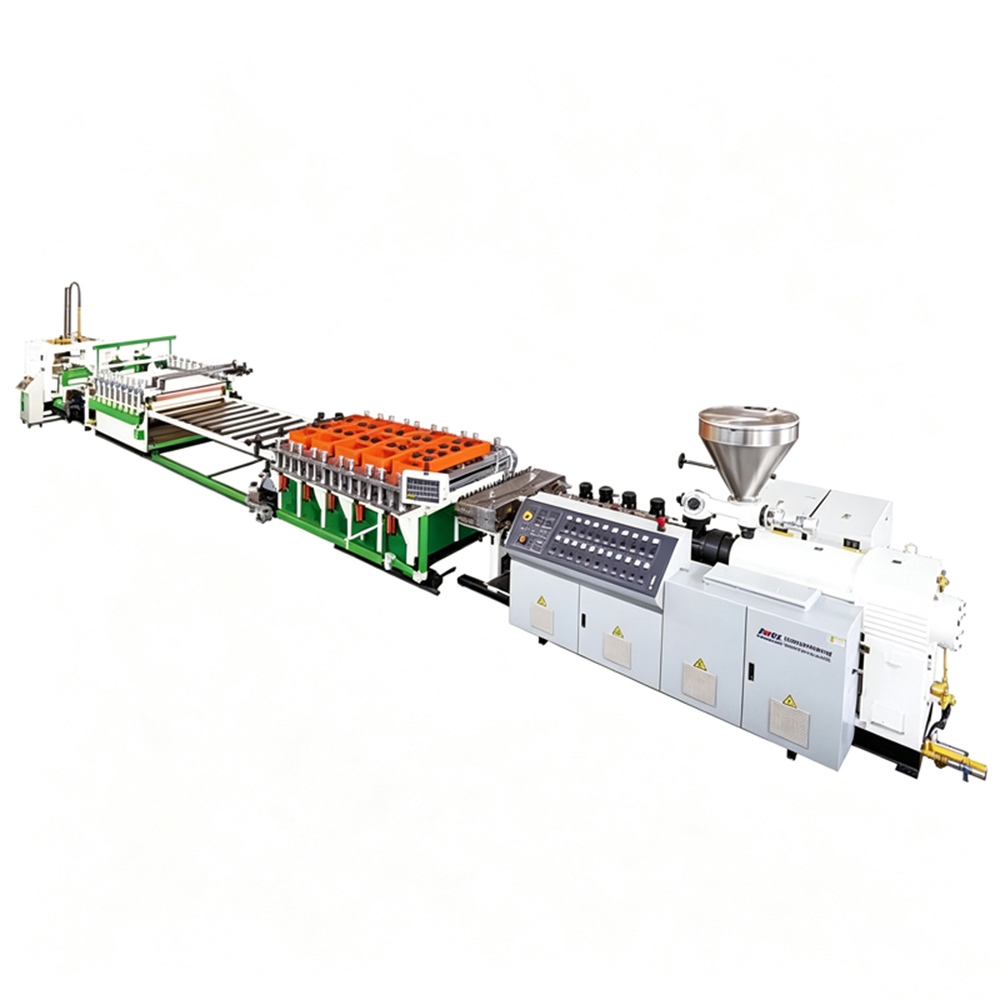
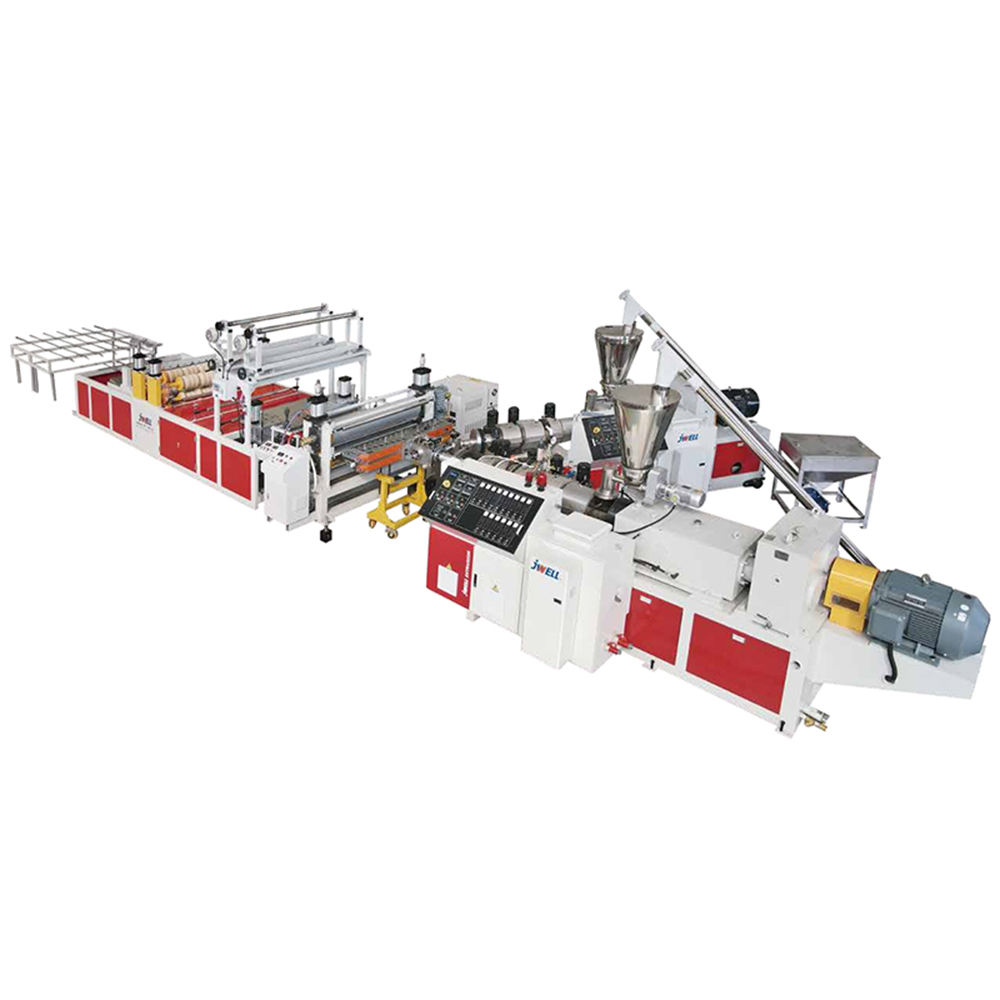
The PE&PP Wood-Plastic Composite Flooring Extrusion Line works on the same principle, with different materials. A WPC core gives the stiffness and the moisture resistance. A wear layer goes on top. A color or print layer sits between them. The layers are stacked in the die and bonded in the melt, not glued afterward. A producer running both lines is solving the same problem twice: how to keep dissimilar materials together and keep each one doing its job.
The food tray and the lidding. The sterile medical pouch. The solvent-resistant chemical container. In every case the shelf life comes from the EVOH core and the moisture protection comes from the PP skins. The sheet is judged on how long the product inside stays good, not on how the sheet looks on the roll.
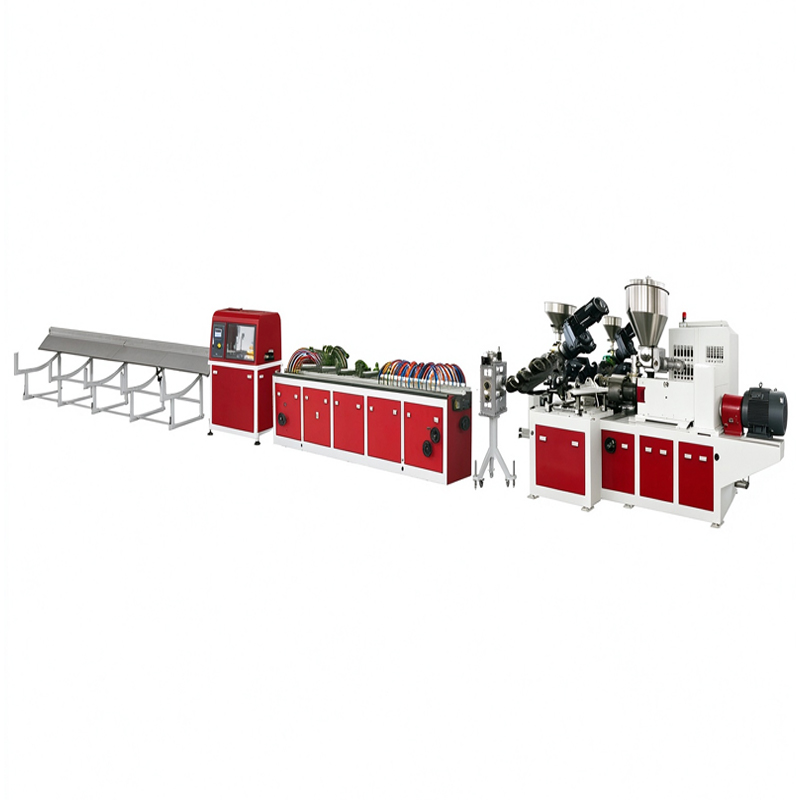
Not "how many layers," but which polymer is doing which job, and how the supplier keeps the core continuous across the full width. A line that runs five extruders but cannot hold the EVOH thickness at the sheet edges is a line that produces barrier sheet with a soft edge.




Pipe Extrusion Production Line
Plastic Shredder Crusher Machine

Tel: +86-19057068112

E-mail: [email protected]

Company Address
No. 128 Qingfeng Road, Xieqiao Town, Haining City, Jiaxing City, Zhejiang Province

19057068112

 English
 русский